The Resurrection of Jesus Christ stands as the single most significant event in human history. It is not merely a religious claim or a hopeful myth; it is the bold declaration that death itself has been defeated.


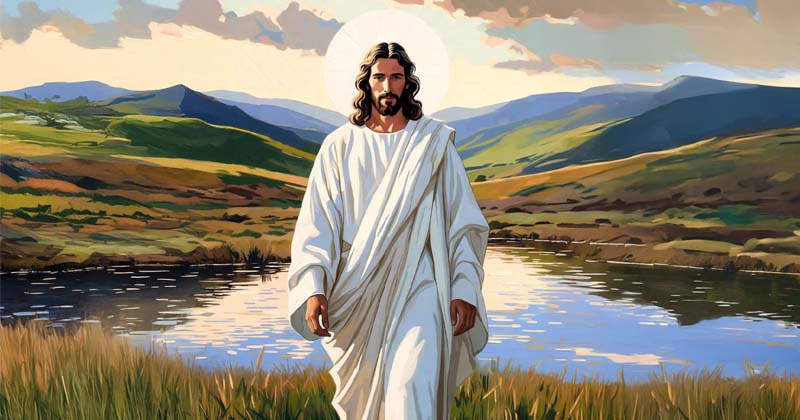
The Resurrection of Jesus Christ stands as the single most significant event in human history. It is not merely a religious claim or a hopeful myth; it is the bold declaration that death itself has been defeated. On the third day after His brutal crucifixion, Jesus walked out of the tomb alive—fully physical, fully transformed, and victorious. This event did not happen in secret. It transformed frightened followers into bold witnesses, turned skeptics into believers, and launched a movement that has reshaped civilization.
A Moment That Changed Eternity
In the sweep of geologic time, human lives appear fleeting—like blades of grass that wither and are forgotten. Jesus shattered this cycle. By rising from the dead, He established an eternal Kingdom for all who follow Him. He proved that He is greater than any philosopher, ruler, or religious founder. Jesus is not simply a great teacher who offered inspiring words—He is the Creator reaching into a fallen world, confronting humanity’s greatest enemy: death.
As Paul L. Maier, professor of ancient history at Western Michigan University, concluded after careful examination: “If all the evidence is weighed carefully and fairly, it is indeed justifiable… to conclude that the tomb in which Jesus was buried was actually empty on the morning of the first Easter.” No credible archaeological, epigraphic, or literary evidence has ever disproved this fact.
“I am the Living One. I died, but look -- I am alive forever and ever! And I hold the keys of death and the grave.” -- Jesus, Revelation 1:18
The Earliest Testimony: 1 Corinthians 15
One of the strongest pieces of evidence comes from the Apostle Paul’s first letter to the Corinthians, written around AD 55—only about two decades after the events. In chapter 15, Paul delivers what scholars recognize as an early Christian creed, a carefully preserved summary of belief that dates even earlier.
Most New Testament scholars, including Dr. Richard Bauckham, date this creed to around AD 35—only two to five years after the crucifixion. Even skeptical scholar Robert Funk of the Jesus Seminar placed it within two to three years. This is remarkable. In the ancient world, accounts of Alexander the Great or other major figures were accepted as history even when written centuries later. Here we have detailed testimony within years.
The creed states:
“Christ died for our sins, according to the Scriptures. He was buried, and he was raised on the third day according to the Scriptures. He appeared to Cephas (Peter), then to the Twelve. After that, he appeared to more than five hundred of the brothers and sisters at the same time, most of whom are still living… Then he appeared to James, then to all the apostles, and last of all he appeared to me also.” (1 Corinthians 15:3-8)
Hundreds of eyewitnesses were still alive when Paul wrote. Opponents could have easily refuted the claim if it were false.
James, Jesus’ own half-brother, had been a skeptic during Jesus’ ministry. After seeing the risen Christ, he became a leader in the Jerusalem church and eventually died for his faith.
Paul himself had been a fierce persecutor of Christians until the risen Jesus confronted him on the road to Damascus.
The inclusion of women as the first witnesses to the empty tomb is especially telling. In first-century Jewish culture, a woman’s testimony carried little legal weight. No one inventing a story would have chosen them—unless that’s exactly what happened.
God's Creation is Wondrous.
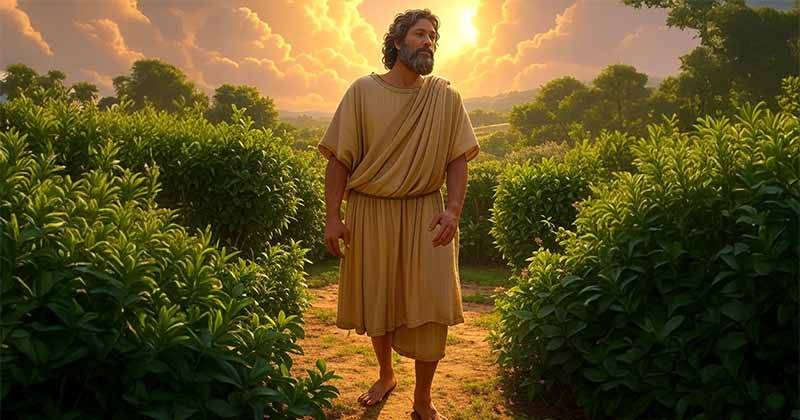
The more we understand the Universe, the more we glimpse the sheer brilliance woven into every atom, every law, every improbable spark of life and consciousness.
“I saw a throne in heaven and someone sitting on it… The one sitting on the throne was brilliant, majestic, and beautiful to look at.” -- Revelation 4:2-4
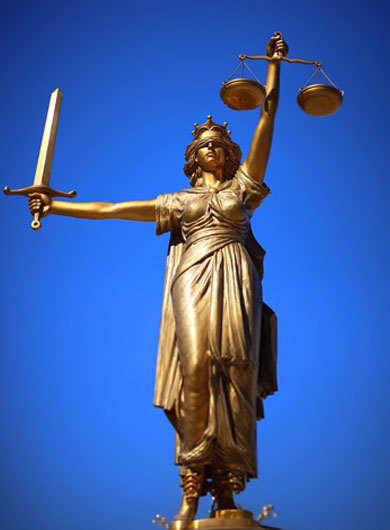
Courtroom Proof: Simon Greenleaf’s Examination
One of the most compelling legal assessments of the Resurrection comes from Simon Greenleaf (1783–1853), one of the founders of Harvard Law School and the author of the authoritative three-volume A Treatise on the Law of Evidence—the standard legal reference work that still influences the U.S. judicial system today.
Greenleaf, originally skeptical, set out to examine the Gospel accounts using the strict rules of legal evidence he had helped establish. He subjected the testimony of the evangelists to the same rigorous cross-examination that would be applied in a court of law. After thorough analysis, Greenleaf concluded that the accounts were reliable and that the Resurrection would hold up as factual evidence in any court.
In his book The Testimony of the Evangelists, Greenleaf wrote that the Gospel writers demonstrated the integrity, ability, and truth expected of credible witnesses. He argued that, according to the laws of legal evidence, there is more proof for the historical fact of Jesus’ resurrection than for almost any other event in history. He famously stated that it would have been impossible for the disciples to maintain their testimony if they had not personally witnessed the risen Christ.
"Blessed be the God and Father of our Lord Jesus Christ! According to his great mercy, he has caused us to be born again to a living hope through the resurrection of Jesus Christ from the dead," -- 1 Peter:1-3
Evidence That Demands a Verdict
- The Empty Tomb: Jewish and Roman authorities had every motive to produce Jesus’ body and silence the movement. They could not.
- Transformed Lives: The disciples went from hiding in fear to boldly proclaiming the Resurrection, most dying as martyrs. People do not willingly die for a known lie.
- Fulfilled Prophecy: Hundreds of years earlier, Old Testament passages (Psalm 16:10, Isaiah 53, Hosea 6:2, Jonah 1:17) foretold the Messiah’s suffering, death, and resurrection on the third day.
- Independent Accounts: The four Gospels offer complementary yet distinct perspectives—evidence of authenticity, not collusion.
- Hostile Witnesses and Embarrassing Details: The earliest critics never denied the empty tomb; they only argued the disciples stole the body—an explanation that collapses under scrutiny. The inclusion of fearful disciples, slow-to-believe followers, and women as primary witnesses further supports authenticity.
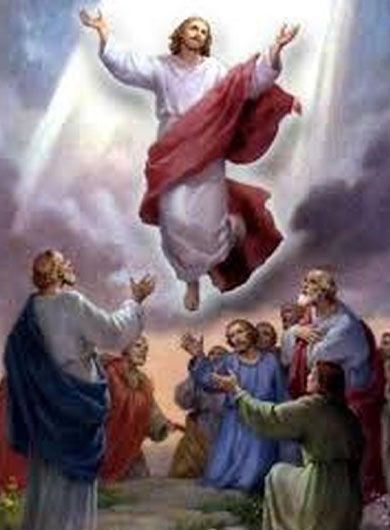
"And God raised the Lord and will also raise us up by his power." -- 1 Corinthians 6:14
N.T. Wright, one of the world’s foremost New Testament scholars, captures the historical reality:
“The truly extraordinary thing is that this belief was held by a tiny group who… could hardly have mounted a riot in a village, let alone a revolution in an empire. And yet they persisted… because Jesus of Nazareth was raised from the dead.”
Far More Than History
The Resurrection is not simply a past event to be studied. It is the authentication of everything Jesus claimed: that He is the way, the truth, and the life; that He is God in human flesh; that forgiveness, new life, and eternal hope are available through Him.
Because He lives, believers can face death without fear. Because He lives, we have confidence that this broken world will one day be made new. And because He lives, every follower of Jesus will one day see Him face to face—either at His return or when we step from this life into the next.
Peter Walker expressed it powerfully:
“The Resurrection is a divine bombshell dropped into the heart of the world… a sure sign that there is a powerful God… and that there is a life beyond the grave when one day we shall meet him.”
Jesus Christ is alive today. He is preparing a place for His people, and He invites all who are weary, burdened, or seeking truth to come to Him.
He is risen. He is risen indeed.
Join Us: Sign Up Today!
It’s easy and free!