We all have it — that built-in sense that lets us look at the world and instantly tell what’s reasonable from what’s ridiculous. Call it common sense, everyday wisdom, or just basic good judgment. It’s the mental shortcut that helps us make sense of life without needing a PhD or a scientific paper.

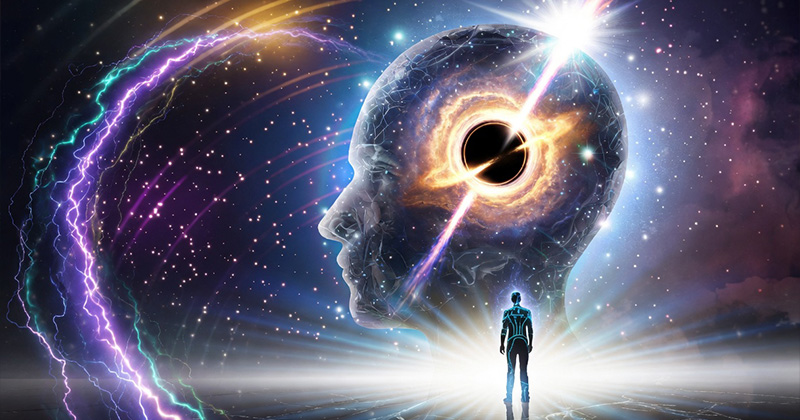
We all have it — that built-in sense that lets us look at the world and instantly tell what’s reasonable from what’s ridiculous. Call it common sense, everyday wisdom, or just basic good judgment. It’s the mental shortcut that helps us make sense of life without needing a PhD or a scientific paper.
Most people share this ability. It’s the voice in your head that says, “Yeah, that adds up,” or “Wait… that doesn’t add up at all.”
Think about it. When someone claims rocks eventually turned into people after sitting around for billions of years, your gut reaction is immediate: “Come on, that can’t be right.” Yet that’s precisely what the standard story of life’s origin demands we accept — no plan, no purpose, just blind chemistry working its magic over endless time.
Suppose I told you my house assembled itself piece by piece over thousands of years with no builder...
That same inner voice kicks in with even bigger claims. Imagine starting with complete nothingness — no space, no time, nothing at all. Then, suddenly, for no reason whatsoever, everything explodes into existence: stars, planets, galaxies, the laws of physics, even time itself. Your common sense immediately pushes back: “That sounds completely backwards.”
Or picture this: a violent blast scatters tiny particles everywhere. Over time, those particles decide to clump together, form giant rocks, spin faster until they glow white-hot, and become stars. Billions upon billions of them. Again, common sense shakes its head. Explosions don’t create neat, organized systems. They destroy order, they don’t build it.
Scientists say the Big Bang only cooked up hydrogen, helium, and a pinch of lithium at the very beginning. All the other elements — the ones that make up our bodies, the Earth, and everything else — supposedly assembled themselves later through purely random processes. No director, no blueprint. Just chance doing the heavy lifting for tens of thousands of years. Does that ring true to you?
God's Creation is Wondrous.
The more we understand the Universe, the more we glimpse the sheer brilliance woven into every atom, every law, every improbable spark of life and consciousness.
"My child, don’t lose sight of common sense and discernment. Hang on to them. " (Proverbs 3:21)
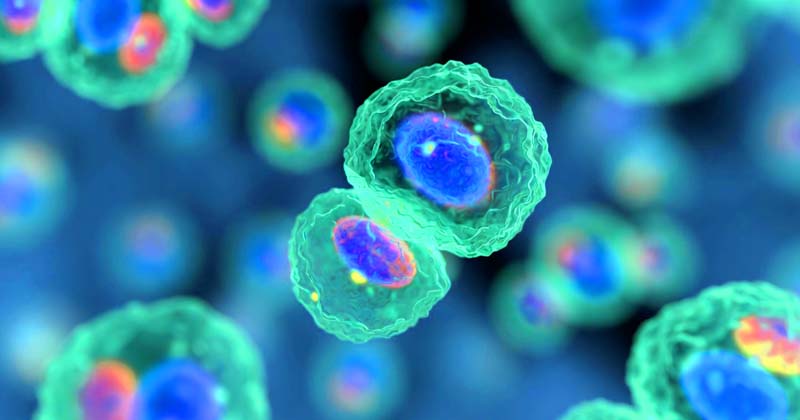
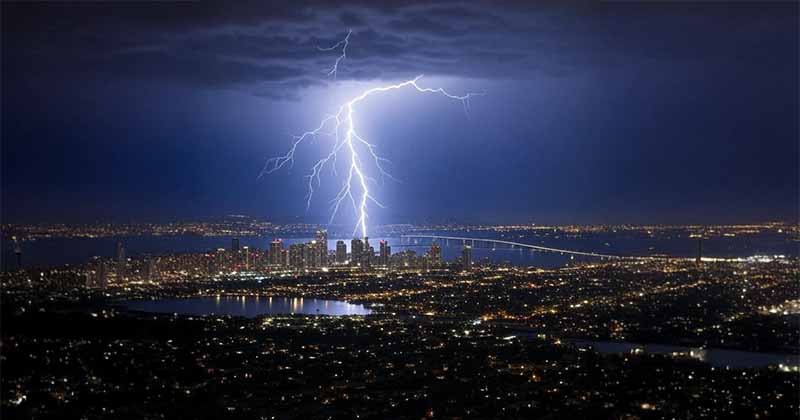
Then there’s the leap from non-life to life. For centuries, smart people agreed that life doesn’t just pop out of dead matter. Yet today, many insist that’s exactly what happened: one day there was no life anywhere, and then — somehow — it appeared. If it didn’t arise spontaneously, where did it come from? Your everyday reasoning says dead things stay dead. Soup left in the rain doesn’t become alive. A lightning strike doesn’t organize chemicals into living creatures. It just fries whatever it hits.
We’re also told that given enough time and energy, everything naturally becomes more complex and orderly. But look around. Leave a car in a field for years and it doesn’t improve — it rusts. Tools left outside don’t sharpen themselves. Buildings crumble. Things fall apart far more easily than they come together. Random energy speeds up decay, it doesn’t create sophisticated machinery like a fruit fly or a human eye.
“He grants a treasure of common sense to the honest. He is a shield to those who walk with integrity.” (Proverbs 2:7)
Real improvement only happens when energy is paired with intelligence. Scientists have spent decades bombarding fruit flies with radiation and mutations, trying to turn them into something new. The result? Still fruit flies. The idea that blind chance could succeed where careful, intelligent effort fails — if we just wait long enough — strikes most people as wishful thinking, not science.
Compare it to something familiar: Suppose I told you my house assembled itself piece by piece over thousands of years with no builder, no plans, no workers. You’d laugh. “Houses don’t build themselves,” you’d say. Yet a single living cell is vastly more complicated than any house. Why would we apply a completely different standard to the origin of life and the universe?
I’m not saying the Big Bang never occurred. I’m saying the idea that it produced everything we see — including conscious, thinking human beings — without any intelligent guidance goes against the most basic rules of cause and effect that we observe every day.
Some will argue we were just incredibly lucky. That we beat odds so astronomical they’re almost impossible to calculate. But when the chances against a purely accidental universe are that extreme, common sense doesn’t whisper “lucky break.” It shouts “designed on purpose.”
"Know that the Lord is God. It is he who made us, and we are his; we are his people, the sheep of his pasture." (Psalm 100:3)
In the end, only two possibilities exist:
Everything we see — stars, planets, life, consciousness — arose by pure accident from lifeless matter, or an intelligent mind was behind it.

When you weigh the options honestly, common sense points strongly in one direction.
- Life wasn’t an accident.
- It was intentional.
And that intention reveals the fingerprint of God.
Join Us: Sign Up Today!
It’s easy and free!